A tribute to Mr. Spock's logic and Leonard Nimoy's altruism.
"From far beyond the galaxies, I've journeyed to this place, to study the behavior patterns of the human race. And I find them, highly illogical." -Mr. Spock's Music from Outer Space
I've always wondered why when people have disagreements with scientific research their counter-evidence is rarely scientific. Why don't people use logical arguments to discount other logical arguments?
With controversial issues such as climate change, vaccination, and human evolution, people usually do not respond with scientific alternatives. Their sources are usually from non-scientists and others with no credentials. Or the rebuttals are opinions by random non-climate scientists, weathermen, authors, lawyers, economists, and politicians. These are the the logical people I should stand behind? Because they have a good idea that sounds good? Why am I putting all my trust into people who have very little real evidence? These are the people I trust with the future of the human race? These politicians with no sources who quote random scientists with no credentials? These are the people we trust to tell us the truth?
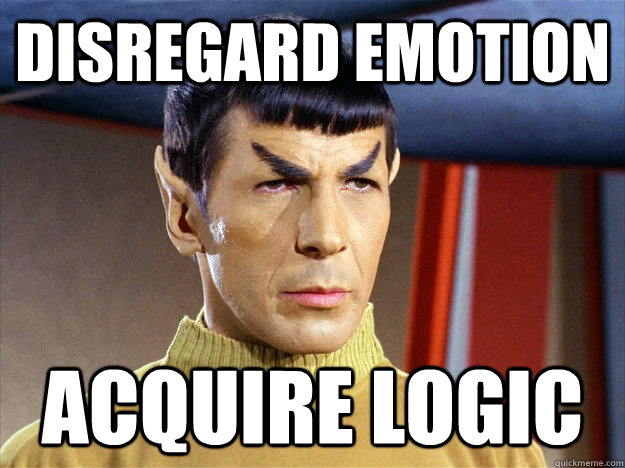
I find it strange that on one hand, people put certain scientific articles and data through massive amounts of scrutiny, but on the other hand give little or no critiques to ideas coming from their own side. They rigorously analyze hundreds of pieces of data from scientists to exploit any amount of data that may be imperfect. Yet, they do not use the same tactics on the data they present as evidence in their arguments. Why haven't they done the same background checks on the few people that help their side? Their own comments and claims are easily fact-checked, it just takes a bit of time to find the research that debunks it. Why do they instantly believe the counter-argument without scrutiny? Emotions?

I have found that an opinion with no data or research is not equivalent to an opinion with data and research. I personally do not unconditionally trust in the opinions of politicians or the media or my next door neighbor. Al Gore, and conservative or liberal politicians or random scientists can say whatever they want about whatever issue they please. Bill Maher, Bill O'Reilly, Stephen Colbert, and Rush Limbaugh, can say whatever they want about whatever issue they please. Fox News, MSNBC, CNN, and atheist/religious forums can say whatever they want. I may use them as starting points to further my research on certain issues but I do not blindly follow their words. People must show their cards and point to the evidence and research for their claims.

Maybe Spock was right. If you've made up your mind, nothing will change it. In this research paper from the American Academy of Pediatrics about "pro-vaccine messaging", it seems that trying to correct misperceptions about an issue may actually be counterproductive and increase, rather than decrease, suspicion.
Even though science changes, is not a mistake to place trust in it. An example is with medicine. Today medical science is still found to be flawed. We still make mistakes, the research is still flawed. But does anyone suggest to use "less science" in medicine? Does that mean we can't trust science in medicine? No, we trust that more science, not less, will correct the original flaws.
Self-correction and reformation is the purpose of the scientific method, and the beauty of it. Self-corrections are why science works to find the facts in the first place. We use science to retest ideas to make sure the results were reliable in the first place. If the research shows different results, then the original research is changed. That is the beauty of science, it self-corrects, it reforms, it develops. An idea is developed, then it becomes stronger and more reliable as it is tested and retested, eventually the data is so reliable that we consider it scientific fact. And even hard incontrovertible fact can change...... by using more science.
Science is the best information we have today about the natural world. And I can trust that science will correct itself if wrong. There aren't many other methods that have that level of humility and pliability. I trust in ideas that change in response to new data and new evidence. I don't trust in untested or unreliable absolutes.

I am passionate about being altruistic and selfless. I don't spend time researching evidence and science for personal gain. Whether that issue is climate science or mental health, I'm passionate about using the most reliable methods to come up with the highest probability of success for others, for mankind.
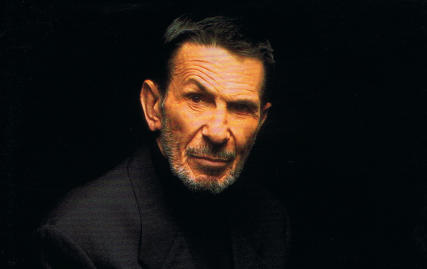
"It's all about trying to make the world and the universe a better place. I'm proud to be connected with it. I think we need that in our lives. We need ethical, heroic people trying to do the right thing to help others and to improve life on this planet and in the universe." -Leonard Nimoy

Comments
Post a Comment